Removing pet odor: the complete guide to a fresh home with dogs and cats
Do you still feel like your house smells of dog or cat despite regular vacuuming and cleaning? Then you are certainly not alone. Pets bring a lot of joy into the home, but also hair, dander, moisture, dirt, and natural body odors. These odor particles cling to furniture, floors, and textiles and can accumulate over time. As a result, a home can sometimes smell unpleasant, even when it looks clean.
Many people try to combat pet odor with an air freshener or scented candle. While this temporarily creates a fresh impression, it usually does not eliminate the cause of the odor. As soon as the perfume scent fades, the original pet odor returns. To have a long-lasting fresh home, you should not only mask the odor, but especially address the source.
In this complete guide, you will learn how pet odor originates, why some houses smell stronger than others, and which measures really help. You will discover how to remove dog odor from furniture and carpets, how to control litter box odor, which natural remedies can be effective, and why a good odor remover can be a valuable addition to a regular cleaning routine.
Why does pet odor occur?
Every dog and cat has a natural body odor. This is completely normal and part of the animal. Problems only arise when odor particles slowly accumulate in the home.
The main causes of pet odor are:
- hair;
- dander;
- skin oil;
- saliva;
- moisture;
- dirt brought in from outside;
- bacteria that feed on organic material.
These factors alone usually do not cause a strong odor. It is precisely their combination that causes a home to smell less fresh over time. Fabric materials such as sofas, rugs, curtains, and dog beds easily absorb these odor particles and then slowly release them into the air.
Why does a wet dog smell so much stronger?
Almost every dog owner recognizes the typical smell of a wet dog. This is not because water itself smells, but because moisture makes the volatile odorous substances on the skin and in the coat evaporate more easily. As soon as a wet dog enters, these odor molecules quickly spread through the room.
In addition, a damp coat stays warm longer, allowing bacteria to multiply more quickly. Especially dogs with a thick undercoat or long coat can develop a stronger odor if they are not dried properly.
Why some dogs smell stronger
Not every dog smells the same. The intensity of the odor depends, among other things, on:
- the breed;
- the coat structure;
- age;
- diet;
- health;
- how often the dog goes outside.
Dogs with a thick, oily coat retain more moisture than short-haired breeds. Dogs that enjoy swimming or regularly walk in the rain also often spread more odor in the house.
A suddenly changed or exceptionally strong body odor can indicate a medical problem, such as a skin infection, ear infection, or dental problems. In that case, it is advisable to contact a veterinarian.
Where does pet odor settle?
Many people think that the odor mainly comes from the dog or cat itself. In reality, a large part of the odor remains in the home.
The dog bed
The dog bed is often the biggest source of odor. Hair, dander, saliva, and skin oil are left behind here daily. If only the cover is washed and the inner filling remains the same for years, the bed can become a persistent source of odor.
Therefore, regularly check whether not only the cover but also the filling can be washed or replaced.
Sofas and armchairs
Many dogs and cats spend hours on the sofa. Fabric upholstery easily absorbs skin oils and odor particles. Even when the sofa looks clean, many odorous substances can still be present deep in the fabric.
A leather sofa generally retains less odor than a fabric sofa, but leather also requires regular maintenance to stay fresh.
Carpets and rugs
Carpet acts like a sponge. Not only hair gets stuck in it, but also dust, moisture, sand, and bacteria. As a result, carpet can become a significant source of pet odor over time.
Regular vacuuming is important, but that alone does not remove all odor particles. Occasional deep cleaning helps to loosen stubborn dirt and accumulated odorous substances.
Curtains
Curtains are often forgotten during cleaning. However, they constantly absorb odors from the air. Especially if a dog likes to lie in front of the window, curtains can unknowingly retain a lot of pet odor.
Car upholstery
The car also deserves attention. A wet dog can make the upholstery smell for a long time. Therefore, preferably use a protective blanket and vacuum the upholstery regularly.
Why cleaning alone is not always enough
Regular cleaning forms the basis of a fresh home, but it does not always solve everything. This is because odor is not only on surfaces but also penetrates deep into materials.
Once odor particles have penetrated the fibers of a sofa or carpet, they cannot be completely removed with a quick cleaning. Therefore, an effective approach always consists of several components:
- identifying the source;
- thorough cleaning;
- sufficient ventilation;
- preventing new odors from accumulating;
- keeping the air in the room fresh.
It is precisely the combination of these steps that ensures a lasting result.
The first step: discover where the smell comes from
Before you grab cleaning products, it's important to first determine exactly where the pet odor is coming from. Many people immediately treat the entire room, while the odor often comes from only one or two places. By first tracing the source, you work more efficiently and prevent the same odor from returning repeatedly.
Walk calmly through the room and pay attention to places where the odor is strongest. Think not only of the dog bed or litter box, but also of sofas, rugs, curtains, and places where your pet often lies. In homes with multiple pets, different odor sources can be present at the same time.
A useful method is to work from top to bottom. First check the dog or cat itself, then its resting place, then furniture and textiles, and finally the floor. This way, you avoid overlooking an important cause.
Check the coat, paws, and ears
In dogs, odor often originates not only from the coat, but also from the paws and ears. Especially after a walk, moisture, mud, and bacteria remain between the paw pads. When the dog then lies on the sofa or in its bed, these odor particles are transferred to textiles.
The ears also deserve attention. Some dog breeds have drooping ears where moisture cannot evaporate as well. This can lead to bacteria and yeasts developing more quickly, causing a strong odor.
Therefore, regularly check:
- the ears for dirt or excessive earwax;
- the paws for moisture and mud;
- the coat for mats or wet spots;
- the collar, which often unknowingly retains a lot of odor.
If your dog suddenly smells much stronger than usual or the odor clearly changes, it is advisable to consult a veterinarian. An unusual odor can indicate a health problem that cannot be solved with cleaning alone.
Don't forget the litter box
For cats, the litter box is usually the biggest source of odor. Even if you scoop daily, urine and bacteria can accumulate in the plastic of the box. Also, litter that is left for too long slowly loses its absorbent effect.
Therefore, regularly empty the litter box completely and clean it with warm water and a mild detergent. Do not use heavily perfumed cleaners, as many cats are sensitive to them.
The mat around the litter box also deserves attention. Litter, dust, and small amounts of urine often remain here, unknowingly contributing to an unpleasant odor.
A regular cleaning routine makes all the difference
Many people wait to clean until they start to notice the smell. By then, odor particles have often already settled deep into furniture and textiles. A regular routine prevents odors from building up.
By regularly performing small tasks, maintenance takes less time and your home remains noticeably fresher.
A practical weekly schedule could, for example, look like this:
| Day |
Activity |
| Monday |
Vacuum and mop floors |
| Tuesday |
Check dog bed or cat bed |
| Wednesday |
Vacuum sofas and chairs |
| Thursday |
Wash blankets and pillows |
| Friday |
Clean carpet or rug |
| Saturday |
Clean toys and food bowls |
| Sunday |
Ventilate and check for odor sources |
This routine doesn't have to take much time. Regular maintenance prevents stubborn pet odors from developing.
Vacuuming: more than just removing hair
Many people vacuum mainly to clean up hair. However, you remove much more than just visible dirt.
During vacuuming, you also remove:
- dander;
- dust;
- pollen;
- dried saliva;
- small dirt particles where bacteria can develop.
Preferably use a vacuum cleaner with a good HEPA filter. This way, fine dust particles and allergens remain better in the vacuum cleaner and are not blown back into the room.
Pay extra attention to:
- baseboards;
- corners;
- under sofas;
- under the dining table;
- along heaters;
- around the dog bed.
It is precisely in these places that hair and dust often accumulate unnoticed.
Wash dog beds and blankets regularly
The dog bed is probably where your dog spends most of its time. As a result, skin oils, saliva, hair, and dirt accumulate here faster than in other places in the house.
Ideally, you wash:
- blankets every week;
- covers every one to two weeks;
- the entire bed according to the manufacturer's instructions.
Allow textiles to dry completely after washing before using them again. Damp fabrics provide an ideal environment for bacteria and fungi, which can cause the odor to return more quickly.
Removing odor from sofas
A fabric sofa can retain odor for years without it being immediately visible. Therefore, regular maintenance is important.
Always start with thorough vacuuming. Use an upholstery attachment to remove hair and dust from seams and crevices.
Then check if the upholstery is removable. Many covers can be washed in the washing machine according to the manufacturer's instructions.
If that's not possible, you can use a suitable textile cleaner. Always test it first on an inconspicuous area to prevent discoloration or damage.
For stubborn odours, a deep cleaning with a carpet or upholstery cleaner can provide a solution. This extracts dirt and odour particles from the fibres instead of just removing them superficially.
Thoroughly cleaning carpets and rugs
Carpet requires a different approach than a hard floor. Its fibres not only trap hair but also dust, moisture, and odour particles.
In addition to regular vacuuming, it is advisable to deep clean a rug several times a year. This can be done with a carpet cleaner or by a professional cleaning company.
For smaller odorous spots, natural remedies like baking soda can help.
Sprinkle a thin layer over the dry carpet, let it work for several hours, then carefully vacuum it up. Baking soda can help absorb certain odours but does not replace thorough cleaning when dirt is deep in the fibres.
Does vinegar work against pet odours?
Vinegar has been used for years as a household remedy against odours. It can help temporarily reduce certain odours and clean surfaces.
However, caution is important.
Not all materials are suitable for a vinegar solution. Some natural stones, wooden floors, and delicate fabrics can be damaged by it.
Therefore, always use a diluted solution and test it first on an inconspicuous area.
For stubborn pet odours, vinegar is also rarely sufficient as the sole solution. See it primarily as a supplement to a good cleaning routine.
Don't forget food bowls and toys
Food bowls, water bowls, and chew toys are surprisingly often forgotten during cleaning. Yet, it is precisely here that bacteria and odours can arise.
Rinse food and water bowls daily and clean them regularly with warm water and a mild detergent.
Rubber toys can often be easily cleaned with warm water. Plush toys and fabric toys are often washable. Always check the washing label before putting them in the washing machine.
By including these small items in your cleaning routine, you prevent unpleasant odours from spreading through the house again.
Ventilation: the indispensable link for a fresh home
Many people think that pet odour mainly arises from insufficient cleaning. In reality, ventilation plays an equally important role. Even a spotless house can smell stale if moisture and odour particles are not adequately removed.
Every day, thousands of microscopic particles are released into the air. These include dander, hair, dust, moisture, and volatile organic compounds. If these linger in the house, they can resettle on furniture, curtains, and floors. This gradually creates a typical animal smell that becomes increasingly difficult to remove.
Why ventilation is so important
Good ventilation does more than just let in fresh air. It ensures that moisture and odour particles are continuously removed. This reduces the chances for bacteria and fungi to develop, and textiles and furniture stay fresh longer.
A well-ventilated home has several advantages:
- less moisture in the house;
- less accumulation of odours;
- a healthier indoor climate;
- less chance of mould formation;
- fewer allergens in the air.
Especially in well-insulated homes, air tends to linger longer. This is beneficial for energy bills, but less so when pet odours can accumulate.
How to ventilate most effectively?
Many people occasionally open a window, but that is not always sufficient. The most effective method of ventilation is cross-ventilation. This involves opening two windows or doors opposite each other, allowing fresh air to flow through the house.
Some practical tips:
- Ventilate every day for at least 15 to 30 minutes.
- Always open windows after vacuuming or mopping.
- Ventilate extra after a rainy walk with the dog.
- Do not let wet towels and blankets dry indoors without ventilation.
- Always keep ventilation grilles open.
By ventilating daily, you prevent odours from settling again.
The influence of humidity
Humidity has a much greater influence on odour than most people think.
When humidity is high, odour molecules tend to linger in the air more easily. Moreover, bacteria and fungi grow faster in a humid environment.
A relative humidity between 40% and 60% is generally considered comfortable for both humans and pets. If the humidity is consistently higher, odours can develop more quickly.
You can check the humidity in your home with a simple hygrometer. This is a useful tool, especially in bedrooms, utility rooms, and areas where pets spend a lot of time.
Air purifiers: when are they useful?
Air purifiers are becoming increasingly popular. They can be a valuable addition, but they don't solve every odour problem.
A good air purifier with a HEPA filter removes, among other things:
- dust;
- pollen;
- dander;
- hairs;
- some bacteria.
Models with an activated carbon filter can also absorb certain odours from the air.
Nevertheless, an air purifier remains a supplement. If the dog bed or sofa itself remains the source of the odour, the odour will eventually return. Therefore, addressing the source is always more important than air purification alone.
Natural remedies for pet odour
Those who prefer not to use harsh cleaning agents can use various natural products. These can help reduce odours, although they are usually not a substitute for thorough cleaning.
Baking soda
Baking soda, also known as bicarbonate of soda, is widely used to absorb odours. It is especially suitable for dry surfaces such as carpets, fabric furniture, and dog beds.
Sprinkle a thin layer over the surface, let it sit for several hours, then carefully vacuum it up.
Although baking soda can reduce certain odours, it does not remove dirt or bacteria. Therefore, see it as support and not as a complete solution.
Vinegar
Vinegar has an acidic pH and can neutralize certain odorous substances. It is also widely used as a cleaning agent for hard surfaces.
Always use vinegar diluted and test it first on an inconspicuous area. Some materials, such as natural stone and untreated wood, can be damaged by acids.
Coffee
A lesser-known method is the use of ground coffee. Coffee can temporarily absorb certain odours, for example in a cupboard or storage room.
For living rooms and larger spaces, however, this is less practical and usually not effective enough.
Odour-absorbing materials
In addition to cleaning agents, there are materials specifically designed to absorb odours.
Think of:
- activated carbon;
- bamboo charcoal;
- odour-absorbing granules;
- silica;
- special odour sachets.
These products can help reduce odours in small spaces, such as shoe cabinets or storage rooms.
For larger living areas, they are often less effective because the amount of air is simply too large.
In practice, we see the same mistakes recurring.
Only adding perfume
The most common mistake is using a strong air freshener without cleaning first.
This makes the room temporarily smell of flowers or citrus, but the original pet odour remains present.
After a few hours or days, it returns.
Too little attention to textiles
Many people mop the floor regularly but forget sofas, curtains, and rugs.
These materials specifically hold the most odour.
Leaving wet textiles lying around
A damp dog towel or wet blanket can develop a strong odour within a few hours.
Therefore, always let textiles dry completely.
Irregular cleaning
A major cleaning once a month is less effective than performing small maintenance tasks every week.
Regularity prevents odours from accumulating.
Only cleaning visible spots
Odour often originates in places you don't immediately see:
- under the sofa;
- behind furniture;
- along skirting boards;
- under the dog bed;
- behind curtains.
By regularly including these spots, you prevent odours from returning.
Why odour sometimes lingers
Sometimes everything seems clean, yet a house still smells of pets.
This is because odour molecules can adhere deeply to porous materials.
Examples include:
- foam rubber;
- mattresses;
- thick carpeting;
- fabric upholstery;
- insulating curtains.
When these materials have absorbed odour for years, one cleaning is often not enough.
In some cases, multiple treatments are needed before the desired result is achieved.
When an odour remover becomes a logical addition
Have you addressed the source, cleaned regularly, and ensured sufficient ventilation, but a slight pet odour still lingers? Then an odour remover can be a valuable addition to your cleaning routine.
Unlike a traditional air freshener, which primarily adds a new scent, odour removers are designed to actively help neutralize unpleasant odours. They do not replace cleaning, but support the result by continuously keeping the air fresh.
Especially in households with multiple pets, or in areas where a dog or cat spends a lot of time, this can noticeably contribute to a more pleasant living environment.
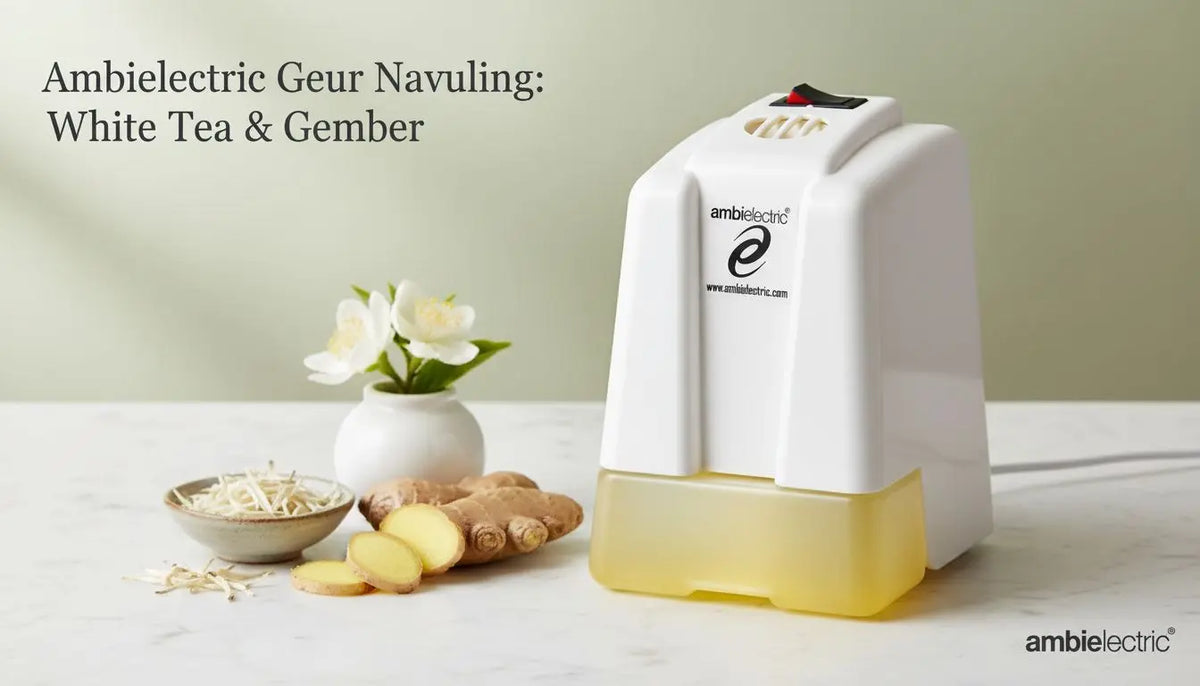
An example of this is the Ambielectric Pet Odour Remover. This electric odour remover continuously diffuses an odour-removing formula throughout the room. This not only masks lingering odours but helps neutralize them, while also spreading a subtle, fresh scent. In combination with a good cleaning routine and sufficient ventilation, this helps keep a home fresh long-term, without needing to spray repeatedly.
Odour removers, air fresheners, and odour absorbers: what's the difference?
When people suffer from pet odour, they often reach for an air freshener first. This seems logical, as a fresh scent immediately gives the impression that the space is cleaner. However, not all products are the same. There is an important difference between masking, absorbing, and neutralizing odours.
By understanding how these products work, you can choose a solution that fits your situation.
Air fresheners: a quick, temporary solution
An air freshener adds a scent to the room. This temporarily makes the existing pet odour less noticeable. However, once the perfume scent fades, the original odour is often still present.
An air freshener can be pleasant when you want to quickly create a fresh impression, for example, just before visitors arrive. However, it is not a solution in itself for long-term reduction of pet odour.
Advantages
- Immediately a fresh scent.
- Easy to use.
- Suitable for incidental use.
Disadvantages
- Does not address the root cause.
- Usually only works temporarily.
- Needs to be reapplied regularly.
Odor absorbers: absorbing odors
Odor-absorbing products contain materials that absorb certain odor particles from the air. Activated carbon and some mineral materials are well-known examples.
These products can work well in small, enclosed spaces, such as a shoe cabinet, pantry, or storage room. In larger living rooms, the effect is often more limited because the volume of air is much greater.
Advantages
- No strong perfume scent.
- Suitable for small spaces.
- Low maintenance.
Disadvantages
- Limited capacity.
- Less effective in large spaces.
- Needs regular replacement.
Odor removers: supporting odor neutralization
Odor removers are designed to actively help reduce unpleasant odors. Instead of just adding a new scent, they support the neutralization of odor particles in the air.
This makes them particularly interesting for homes where new odors arise daily, for example from dogs, cats, or other pets.
It is important to emphasize that even an odor remover is not a substitute for cleaning. When a dog bed has not been washed for months or a carpet is heavily soiled, the source will persist. The best results are always achieved by combining various measures.
Why continuous operation is important
A dog or cat produces new odor particles every day. This means that a solution should ideally work continuously.
A spray often only has an effect for a few minutes or hours. After that, the scent disappears from the room again.
An electric odor remover, on the other hand, works continuously. This keeps the concentration of the odor-removing formula constant in the room. Especially in living rooms, hallways, and other areas where pets are often present, this can contribute to a long-lasting fresh living environment.
Ambielectric as a supplement to a good cleaning routine
When the source of the odor has been addressed and the home is regularly cleaned, an electric odor remover can be a valuable addition.
The Ambielectric Pet Odor Remover is designed for continuous use indoors. The diffuser disperses an odor-removing formula that helps neutralize unpleasant pet odors while simultaneously releasing a subtle fresh scent.
Therefore, the product is particularly suitable for:
- living rooms;
- bedrooms;
- hallways;
- home offices;
- practice rooms;
- pet shops;
- grooming salons;
- holiday homes.
Because the diffuser works day and night, the room remains pleasantly scented even between cleanings.
When is an odor remover useful?
An odor remover is particularly interesting when:
- you have multiple dogs or cats;
- a dog regularly comes in wet;
- the living room is used intensively;
- the dog bed is in the living room;
- visitors indicate that they smell animals;
- you still experience a slight pet odor despite cleaning.
In these situations, an odor remover is not a substitute for cleaning, but rather a supplement to daily maintenance.
Practical step-by-step plan for a long-lasting fresh home
If you really want to reduce pet odor, you don't have to clean for hours every day. A consistent approach often yields much more than an occasional deep clean.
Step 1 – Check the source
Walk through the room and determine where the odor is coming from. Check the dog bed, litter box, sofas, carpets, and your pet's fur.
Step 2 – Remove hair and dust
Vacuum floors, baseboards, furniture, and hard-to-reach corners. Preferably use a vacuum cleaner with a HEPA filter.
Step 3 – Clean textiles
Wash blankets, bed covers, and pillows regularly. Clean sofas and carpets according to the manufacturer's instructions.
Step 4 – Ventilate the home
Open windows opposite each other daily so that fresh air can circulate well through the home.
Step 5 – Support with an odor remover
Once the home is clean, an odor remover like the Ambielectric Pet Odor Remover can help keep the space fresh for a long time.
Checklist: how to keep pet odor under control
Use this checklist as a reminder:
✅ Ventilate daily
✅ Dry dog's paws after a walk
✅ Scoop litter box daily
✅ Vacuum floors at least twice a week
✅ Clean sofas regularly
✅ Wash blankets and beds
✅ Clean toys
✅ Clean food bowls
✅ Deep clean carpets regularly
✅ Check odor remover and replace refill in time
Special situations
A puppy in the house
Puppies have more accidents, which means odors penetrate floors and textiles more quickly. Clean accidents immediately and do not let moisture soak in.
An older dog
Older dogs can develop a stronger body odor due to health problems. Therefore, regularly check their skin, teeth, and ears.
Multiple pets
The more animals in the house, the more important a consistent cleaning routine becomes. By keeping odors under control daily, you prevent them from accumulating.
After a rainy walk
Always dry the dog thoroughly before he lies on the sofa or in his bed. This prevents moisture and odor particles from penetrating deep into the fabric.
Frequently asked questions about removing pet odors
Why does my house still smell of dog even though I clean regularly?
This is one of the most frequently asked questions. Often, the cause is not visible dirt, but odor particles that have deeply penetrated textiles and furniture. Sofas, carpets, curtains, and dog beds absorb skin oils, dander, and moisture. When these materials are not regularly deep cleaned, they continue to release odor.
In addition, ventilation plays an important role. In well-insulated homes, odors linger longer when insufficient fresh air enters.
How often should I wash the dog bed?
That depends on the size of the dog, the season, and how much time the dog spends in its bed. As a general guideline:
- Blankets: wash every week.
- Bed cover: every one to two weeks.
- Inner filling: regularly clean or replace according to the manufacturer's instructions.
Does your dog have a skin problem or often come home wet? Then more frequent washing is advisable.
Does baking soda really work against pet odor?
Baking soda can help absorb odors from dry materials such as carpet or upholstered furniture. However, it is not a miracle cure. Baking soda does not remove bacteria and does not solve the cause of the odor. Therefore, use it as a supplement to thorough cleaning and not as the sole solution.
Is vinegar safe for furniture?
A diluted vinegar solution can be used on some surfaces, but is not suitable for all materials. Natural stone, untreated wood, and some fabrics can be damaged by acids. Always test first in an inconspicuous area and follow the manufacturer's maintenance instructions.
Why does a wet dog smell so much stronger?
When a dog gets wet, odor compounds from the skin and coat are released more easily. Additionally, bacteria can develop faster in a moist environment. By drying your dog thoroughly after a walk or swim, you limit this effect.
Can an air purifier remove pet odor?
An air purifier can help remove dust, dander, and some odor particles from the air. However, the source often remains in furniture or textiles. Therefore, consider an air purifier as a supplement and not as a replacement for cleaning.
Does vacuuming more often help?
Yes. Regular vacuuming removes not only hair, but also dander, dust, and dirt where bacteria can develop. Preferably use a vacuum cleaner with a HEPA filter and don't forget baseboards, corners, and furniture.
How do I prevent my sofa from smelling like a dog?
If possible, use a washable blanket or protective cover on your dog's favorite resting spot. Vacuum the sofa weekly and clean the upholstery according to the manufacturer's instructions. Preferably let a wet dog dry thoroughly before it jumps on the sofa.
What is the difference between an air freshener and an odor remover?
An air freshener primarily adds a new scent to the room. An odor remover is designed to actively help neutralize unpleasant odors. As a result, odor removers are a better supplement to a good cleaning routine if you want to reduce pet odor long-term.
When is an odor remover useful?
An odor remover is an especially good choice when:
- you have multiple pets;
- you still smell a slight pet odor despite cleaning;
- the dog bed or litter box is in the living room;
- you want to maintain a fresh living environment between cleanings.
In combination with regular cleaning and ventilation, an odor remover can help keep the room fresh for a long time.
The most important tips at a glance
Do you want to effectively remove pet odor? Then it's not about one miracle cure, but a combination of measures.
The most important steps are:
- Always address the source of the odor first.
- Vacuum several times a week.
- Wash dog beds, blankets, and covers regularly.
- Periodically clean sofas, carpets, and curtains.
- Always dry a wet dog thoroughly.
- Ventilate daily.
- Keep the litter box clean.
- Use natural aids as support.
- Maintain food bowls and toys.
- Support your cleaning routine with an odor remover when necessary.
A fresh home starts with a good routine
Many people look for a quick solution for pet odor. In practice, this rarely exists. A pleasantly scented home results from a combination of regular maintenance, good hygiene, and adequate ventilation.
Fortunately, it doesn't have to take much time. By performing a few small tasks every week, you prevent odors from accumulating. It is precisely this regularity that makes the difference between a house where pet odor persists and a home that smells fresh for a long time.
Have you tackled the source, is the home clean, and do you ventilate sufficiently, but still notice a slight pet odor? Then an electric odor remover can be a valuable addition. Products like the Ambielectric Pet Odor Remover are designed to continuously release odor-removing substances into the room. This helps neutralize unpleasant pet odors and keeps the living environment fresh for a long time, without constant spraying.
Conclusion
Animal odor is partly inherent to living with dogs and cats, but a home does not have to constantly smell like pets because of it. By addressing the source of the odor, cleaning regularly, properly maintaining textiles, and ventilating daily, you can prevent many problems.
For situations where odors still accumulate, an odor remover can be a logical addition to your cleaning routine. In combination with good maintenance, this ensures a fresh and pleasant living environment where both you and your pets feel comfortable.